Expedition staff and guest lecturer
Marine ecologist, guest lecturer, Zodiac driver and dive and snorkel guide for expedition cruises, liveaboards and research trips, in the Indo-Pacific, the UK and the North Atlantic.
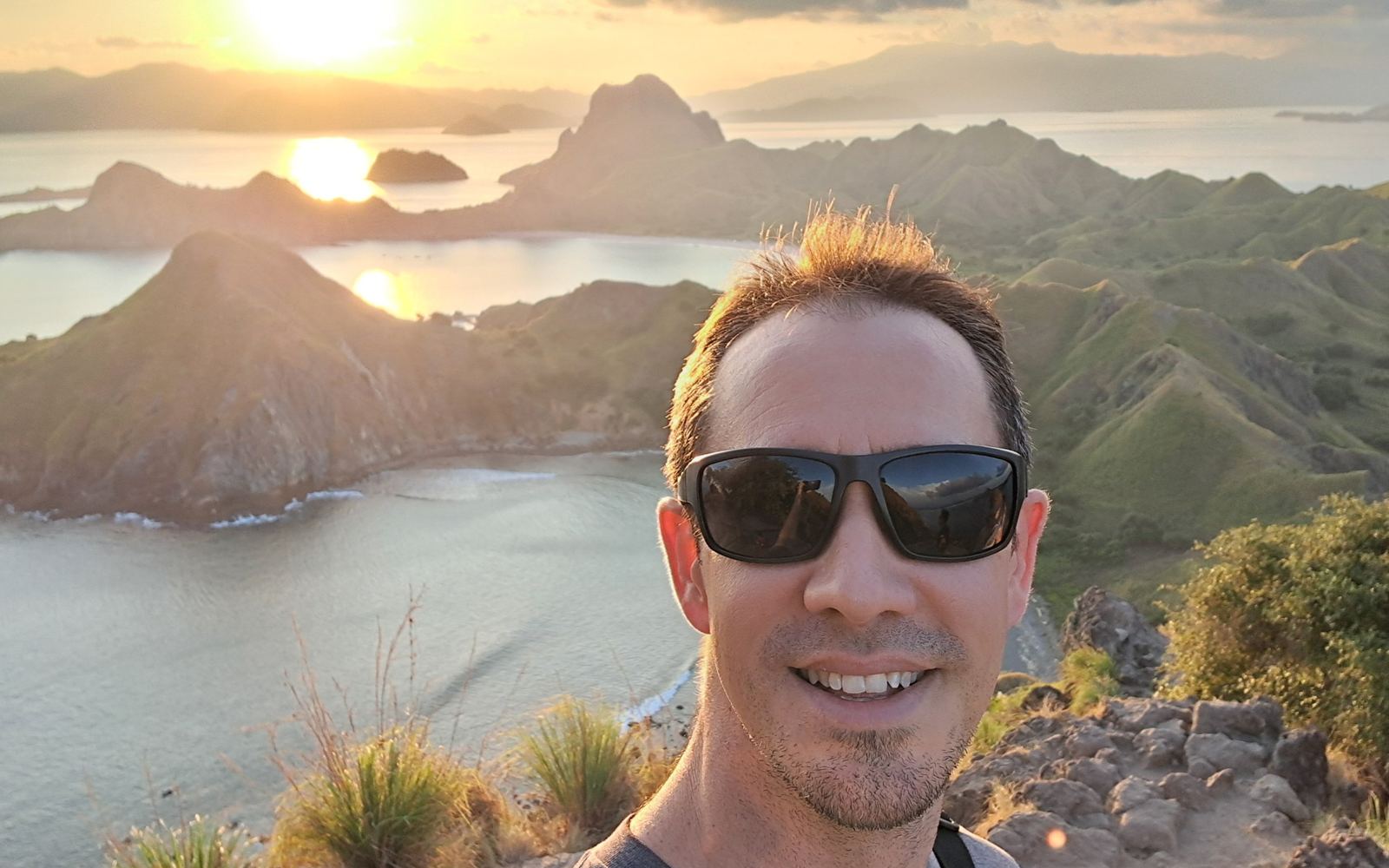
What I bring to a voyage
I work as a guest presenter and expedition staff on expedition cruise ships and liveaboards, with operators including Heritage Expeditions and True North in Australia. I hold a PhD from Murdoch University, where I studied the diving behaviour of large marine planktivores using animal-borne tags, and I have carried out research across eastern Indonesia under an Indonesian research permit.
I’m qualified in Emergency First Response primary and secondary care, and I’m a former EFR instructor.
That combination means I can do more than one job on board: give the evening lecture, run the morning snorkel, drive a Zodiac to the landing, and answer the question about what that animal was doing.
Roles
Guest lecturer and naturalist
I’ve been lecturing since 2010. My talks are fun and science-backed, and range from formal evening presentations to informal sessions: daily recaps on what we’ve seen that day, briefings before landings and dives, and conversations with guests on deck. They’re built for curious non-specialists, with the science accurate and current.
Marine ecologist
Species identification, interpreting wildlife encounters as they happen, and helping guests understand what they’ve seen. I can also support citizen-science and research activity on board.
Zodiac driver
Shore landings, cruising and wildlife viewing, and transfers to dive and snorkel sites. I hold RYA Powerboat Level 2 and have driven boats in the UK and, for 15 years, in the tropics.
Dive and snorkel guide
Guiding, site briefings and in-water supervision, with a strong emphasis on responsible encounters with wildlife: buoyancy, distance, and never touching or chasing animals.
The UK and the North Atlantic
I studied Coastal Marine Biology at the University of Hull, I’m UK-based between voyages, and I’m available for work in and around the UK and across the North Atlantic. My published research includes North Atlantic work: the methods paper behind FishDiveR analyses an Atlantic cod record from the English Channel alongside Indo-Pacific species.
I build talks for each itinerary, so North Atlantic voyages get presentations on North Atlantic wildlife and waters. I’m also happy to speak to dive clubs, societies, schools and conservation groups in the UK.
Example presentations
A selection from my existing talks and recaps. Most can be given as a full presentation or a short recap, and all are adapted to the itinerary and audience.
Reefs and reef life
- Getting to know the house reef. An introduction to the common reef fish guests will meet on their first snorkel or dive
- Common reef inhabitants. The invertebrates, corals and fish that make up a healthy reef
- What was that fish? A fun identification session built from guests’ own sightings
- Hard and soft corals. How to tell them apart, and why the difference matters
- Boring reef life and giant clams. The animals that bore into, build and recycle the reef
- Triggerfish, moray eels and batfish. Short species spotlights, ideal as daily recaps
- Cone shells and venom. Beautiful, deadly and medically important
- Ocean weirdos. The strangest animals on the reef, including octopus and their relatives
- Fluorescence. The hidden glow of reefs at night, and what it might be for
- Fish reproduction. Spawning, sex change and parental care
Sharks, rays and other big animals
- Manta rays. Reef and oceanic mantas, how to tell them apart, and how they live
- Manta research. What tagging and photo identification are revealing, from my own PhD research
- Sharks. Diversity, behaviour and the threats they face
- Walking sharks. The small sharks that walk across the reef on their fins
- Whale sharks and hammerheads. Two of the region’s most sought-after encounters
- Giant shovelnose ray. A threatened and little-known relative of the sharks and rays
- Shark and ray conservation in eastern Indonesia. Protected areas, ranger patrols and what has changed
Islands, evolution and people
- The Wallace Line and Alfred Russel Wallace. The invisible boundary between Asian and Australian wildlife, the naturalist who first recognised it while exploring these islands, and his part in the theory of natural selection
- The Ring of Fire. Volcanoes, earthquakes and the islands they built
- Tambora and the year without a summer. The 1815 eruption that changed the world’s weather
- Komodo dragons. The world’s largest lizard, and its island home
- Birds of paradise. Evolution at its most extravagant
- Marine lakes and stingless jellyfish. Isolated lakes and the life that evolved in them
- Comb jellies. Not jellyfish at all, and one of the most debated branches of the animal family tree
- Pitcher plants, macaques and the Chocolate Hills. Island stops, explained
- Seabirds of the tropical west Pacific. Who’s following the ship, and why
- The Banda Islands. Nutmeg, empire and some of the richest reefs anywhere
- Bahasa Indonesia and betel nut. A few useful words, and one of the region’s oldest traditions
Availability and enquiries
Email me with your dates, region and the roles you need, and I’ll send availability and a CV.